Rongai Route Kilimanjaro – 6 Days Trek Itinerary
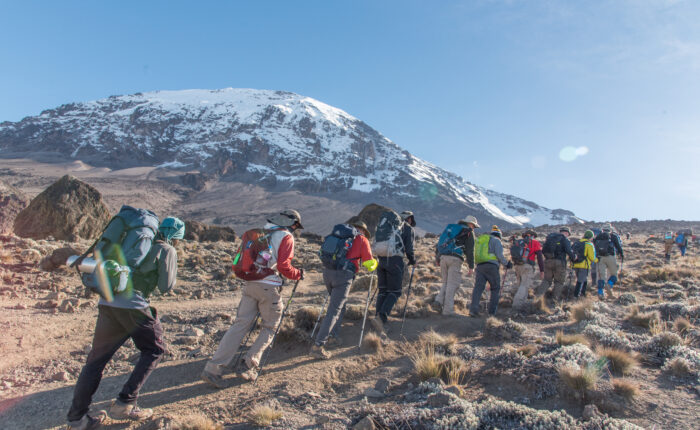
The 6 Days Rongai Route Kilimanjaro Trek is one of the most scenic and peaceful ways to climb Mount Kilimanjaro. As the only route approaching the mountain from the northern side near the Kenyan border, the Rongai Route offers a unique wilderness experience with fewer crowds than other Kimanjaro trek trails.
Renowned for its gradual ascent, the Rongai Route is an excellent choice for climbers seeking a quieter alternative to the popular Marangu Route. The northern slopes receive less rainfall, making this route especially suitable during the rainy season. It is also recommended for first-time trekkers and those with limited backpacking experience thanks to its moderate difficulty and steady elevation gain.
Although the 6-day itinerary provides a rewarding challenge, climbers should be aware that the shorter duration offers less time for acclimatization compared to the 7-day Rongai Route.
Day 1: Nalemoru Gate (1,950 m) – Simba Camp (2,625 m)
Distance: 8 km (5 miles)
Hiking Time: 4–6 hours
Elevation: 1,950 m (6,398 ft) to 2,625 m (8,612 ft)
Habitat: Rainforest
Your adventure begins with a scenic drive from Moshi to Nalemoru Gate, located on Kilimanjaro’s northern side. After completing park registration, you will begin your trek through cultivated farmland before entering lush pine forests.
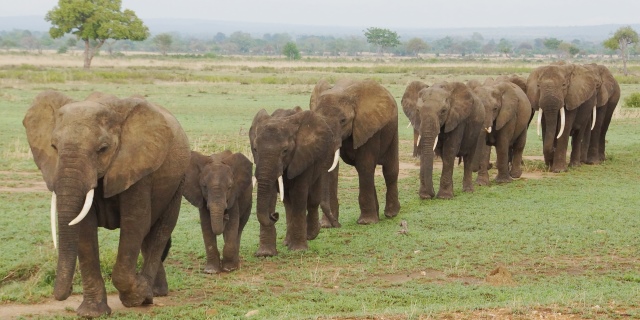
Keep an eye out for black-and-white colobus monkeys, and if you’re fortunate, you may even spot elephants or buffalo moving through the forest. The day ends at Simba Camp, where you will enjoy dinner and spend your first night on the mountain.
Day 2: Simba Camp – Second Cave Camp
Distance: 5 km (3 miles)
Hiking Time: 3–4 hours (plus acclimatization hike)
Elevation: 2,625 m (8,612 ft) to 3,450 m (11,319 ft)
Habitat: Heath and Moorland
Today’s trek is a gentle climb through open moorland with spectacular views of Kibo Peak and the eastern ice fields. After arriving at Second Cave Camp, enjoy a hot lunch and some time to relax.
Later in the afternoon, you’ll take an acclimatization hike toward Third Cave before returning to camp. This “climb high, sleep low” strategy helps your body adjust to the increasing altitude and improves your chances of reaching the summit.
Day 3: Second Cave Camp – Third Cave Camp
Distance: 5 km (3 miles)
Hiking Time: 3–4 hours
Elevation: 3,450 m (11,319 ft) to 3,870 m (12,697 ft)
Habitat: Heath
After breakfast, continue your gradual ascent across the alpine moorland toward Third Cave Camp. The trail offers breathtaking views of both Kibo and the rugged peaks of Mawenzi, providing excellent photo opportunities throughout the day.
Arrive at camp in the early afternoon, allowing plenty of time to rest and prepare for the higher elevations ahead.
Day 4: Third Cave Camp – Kibo Hut
Distance: 8 km (5 miles)
Hiking Time: 5–6 hours
Elevation: 3,870 m (12,697 ft) to 4,700 m (15,420 ft)
Habitat: Alpine Desert
Today’s trek crosses the dramatic alpine desert known as The Saddle, a vast plateau stretching between Mawenzi and Kibo Peaks. The barren volcanic landscape creates an unforgettable high-altitude experience.
Arrive at Kibo Hut in the afternoon, where you will enjoy an early dinner before resting. A good night’s sleep is essential as your summit attempt begins shortly after midnight.
Day 5: Kibo Hut – Uhuru Peak (5,895 m) – Horombo Hut
Distance: 22 km (14 miles)
Hiking Time: 10–14 hours
Elevation: 4,700 m (15,420 ft) to 5,895 m (19,341 ft), then down to 3,720 m (12,205 ft)
Habitat: Arctic and Heath
Today is the highlight of your Mount Kilimanjaro climb.
Your summit ascent begins around midnight under a sky filled with stars. Following a slow and steady pace, you’ll pass Hans Meyer Cave before reaching Gillman’s Point (5,681 m) on the crater rim at sunrise.
From here, continue along the crater rim for another 1–2 hours to reach Uhuru Peak (5,895 m)—the highest point in Africa. Celebrate your incredible achievement with unforgettable panoramic views and photos from the Roof of Africa.
After spending time at the summit, descend back to Kibo Hut for a well-deserved meal and short rest before continuing down to Horombo Hut for your overnight stay.
Day 6: Horombo Hut – Marangu Gate
Distance: 20 km (12 miles)
Hiking Time: 5–7 hours
Elevation: 3,720 m (12,205 ft) to 1,860 m (6,102 ft)
Habitat: Heath and Rainforest
Your final day begins with a pleasant descent through moorland before entering Kilimanjaro’s lush rainforest. Continue past Mandara Hut as the trail winds through towering trees alive with birdsong and tropical vegetation.
Upon reaching Marangu Gate, you’ll receive your official Kilimanjaro Summit Certificate before meeting your driver for the transfer back to your hotel in Moshi.
Relax with a hot shower, celebrate your successful climb to Uhuru Peak, and reflect on an unforgettable journey to the highest mountain in Africa.
Why Choose the Rongai Route?
The Rongai Route is one of the best options for climbers seeking a quieter and more remote way to reach the summit of Mount Kilimanjaro. Approaching the mountain from the northern side near the Kenyan border, this route offers beautiful wilderness scenery, fewer crowds, and excellent wildlife viewing opportunities during the early stages of the trek.
Unlike the busier southern routes, the Rongai Route follows a gradual ascent, making it an excellent choice for first-time climbers and anyone looking for a more relaxed trekking experience. The northern side of Kilimanjaro also receives less rainfall, making this route a popular choice during Tanzania’s rainy seasons.
Although this itinerary takes six days, climbers who want additional acclimatization may also consider the 7-day Rongai Route for an even higher chance of reaching Uhuru Peak.
Rongai Route Highlights
- The only Kilimanjaro route approaching from the northern side.
- Less crowded than Machame, Lemosho, and Marangu Routes.
- Gentle and gradual ascent suitable for first-time climbers.
- Excellent choice during the rainy season due to lower rainfall.
- Stunning views of Kibo, Mawenzi, and the Kenyan plains.
- Crosses the spectacular alpine desert known as “The Saddle.”
- Descends via the scenic Marangu Route.
- Professionally guided by experienced Watu Safaris mountain guides.
Is the Rongai Route Difficult?
The Rongai Route is considered a moderately difficult Kilimanjaro climbing route. While the trail is less steep than many other routes, the high altitude still presents a significant challenge.
The six-day itinerary provides limited acclimatization time, so maintaining a slow hiking pace, staying hydrated, and following your guide’s instructions are essential for a successful summit attempt.
Rongai Route Success Rate
The Rongai Route offers an excellent summit success rate thanks to its gradual ascent profile.
For the highest chance of reaching Uhuru Peak (5,895 m), many climbers prefer the 7-day Rongai Route, which provides an additional day for acclimatization.
Best Time to Climb Kilimanjaro via the Rongai Route
The Rongai Route can be climbed throughout the year. However, the best conditions are generally experienced during:
- January to March – Cooler temperatures, fewer climbers, and occasional snow near the summit.
- June to October – Dry weather, excellent visibility, and the most popular climbing season.
- November and May – The Rongai Route remains a good option because the northern slopes receive less rainfall than Kilimanjaro’s southern routes.
Why Climb Kilimanjaro with Watu Safaris?
At Watu Safaris, we are passionate about creating safe, memorable, and successful Kilimanjaro adventures. Our experienced mountain guides, professional support team, and commitment to responsible tourism ensure every climber receives exceptional care from the first day to the summit.
When you climb with us, you’ll enjoy:
- Professional English-speaking mountain guides.
- Experienced cooks and dedicated porters.
- High-quality camping equipment.
- Nutritious mountain meals prepared daily.
- Comprehensive safety monitoring throughout the trek.
- Fair treatment of porters following responsible tourism practices.
- Reliable airport transfers and hotel accommodation options.
- Personalized service before, during, and after your climb.
What’s Included
- Airport transfers (if booked as part of your package).
- Two-way transfers between Moshi and Kilimanjaro National Park.
- Professional mountain guides, cooks, and porters.
- Kilimanjaro National Park entrance and camping fees.
- All camping equipment (except personal sleeping bag).
- Sleeping tents and dining tent.
- All meals during the climb.
- Drinking water throughout the trek.
- Daily health monitoring and emergency first aid.
- Government taxes and VAT.
- Kilimanjaro Summit Certificate.
What’s Not Included
- International and domestic flights.
- Tanzania Visa.
- Travel and medical insurance.
- Personal climbing gear.
- Sleeping bag (available for hire if required).
- Tips for guides, cooks, and porters.
- Personal expenses such as drinks, snacks, and souvenirs.
Frequently Asked Questions
How many days does the Rongai Route take?
The Rongai Route is available as both a 6-day and 7-day itinerary. The 7-day option provides better acclimatization and generally results in a higher summit success rate.
Is the Rongai Route suitable for beginners?
Yes. Its gradual ascent makes it one of the most beginner-friendly routes on Mount Kilimanjaro, provided climbers have a reasonable level of fitness.
Where does the Rongai Route start?
The trek begins at Nalemoru Gate, located on Kilimanjaro’s northern side near the Kenya-Tanzania border.
Which route do you descend?
All Rongai Route climbs descend via the Marangu Route, finishing at Marangu Gate.
Can I see wildlife on the Rongai Route?
Yes. During the lower sections of the trail, climbers may encounter colobus monkeys and a variety of birdlife. On rare occasions, elephants or buffalo may also be seen in the surrounding forest.